Trypsin Activity Assay Kit
DESCRIPTION
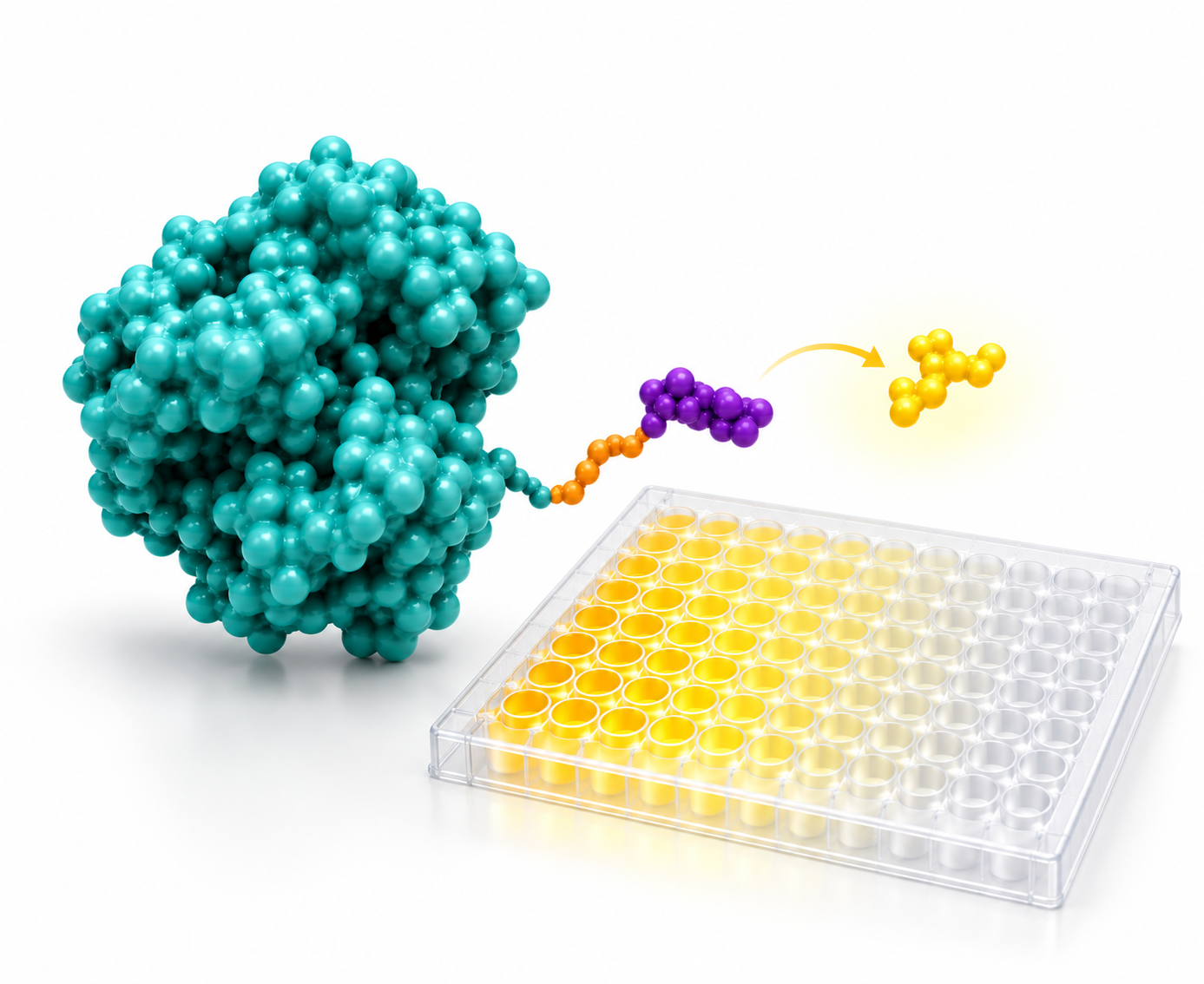
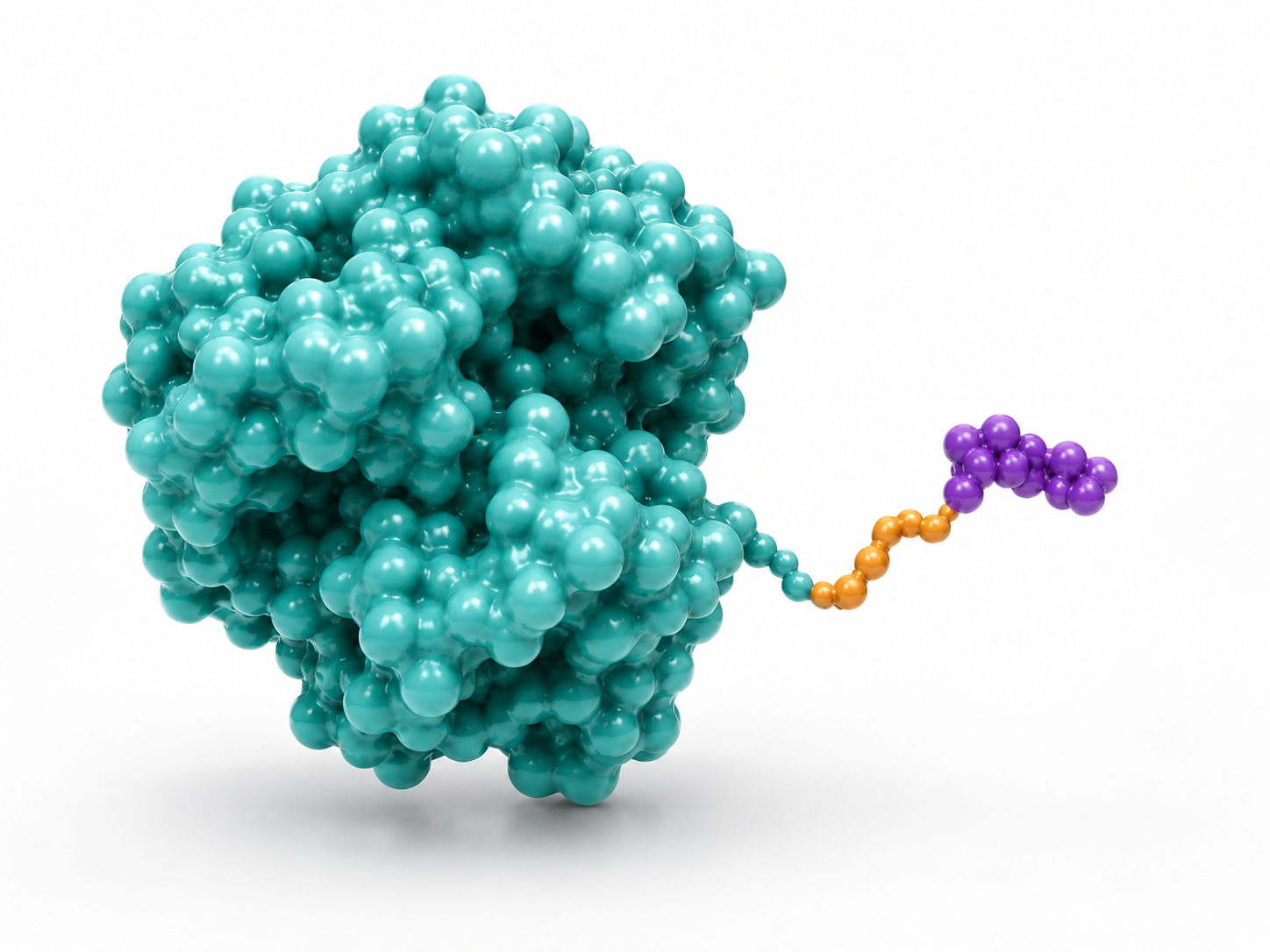
The MEDNA Trypsin Activity Assay Kit is a chromogenic, microplate-based assay for measuring trypsin activity in purified trypsin and trypsin-containing samples. The assay uses Boc–Gln–Ala–Arg–pNA, a synthetic peptide substrate that releases p-nitroaniline (pNA) upon trypsin-catalyzed cleavage. Formation of pNA is monitored by the increase in absorbance at 405 nm (A405).
A supplied Complete Hydrolysis Reference (CHR) provides the maximum substrate-derived A405 response when hydrolysis is complete. By relating each sample’s blank-corrected initial reaction rate to this reference signal, users can calculate activity in mU/mL or, when protein concentration is known, specific activity in mU/mg.
KEY FEATURES
- Simple two-component reaction: Mix 50 µL sample with 50 µL substrate working solution.
- Internal reference: Complete Hydrolysis Reference enables quantitative determination of trypsin activity.
- Quantitative kinetic readout: Track pNA formation at 405 nm and calculate activity from the initial linear rate.
- Flexible sample types: Suitable for purified trypsin and appropriately diluted research samples containing trypsin.
KIT COMPONENTS
RECOMMENDED APPLICATIONS
- Trypsin Activity Quantification & Enzyme Quality Control: Measure enzymatic activity in purified trypsin samples. Evaluate batch-to-batch consistency, activity retention, and stability of trypsin products.
- Cell Culture Applications: Assess trypsin activity in cell dissociation solutions and monitor residual activity following trypsinization.
- Biological Sample Analysis: Investigate trypsin-like protease activity in cell lysates, tissue homogenates, and culture media.
- Trypsin Inhibitor Studies: Evaluate the effects of protease inhibitors and experimental conditions on trypsin activity.
- Protein Processing Research: Monitor trypsin activity during enzymatic protein processing and optimize proteolytic reaction conditions.
ASSAY PRINCIPLE
Trypsin hydrolyzes Boc–Gln–Ala–Arg–pNA at the Arg–pNA bond, releasing pNA, which produces an A405 signal. The initial rate of A405 increase reflects substrate hydrolysis per minute. The CHR is assayed in parallel and incubated to a verified complete-hydrolysis endpoint, providing the absorbance corresponding to 50 nmol of substrate in the standard reaction.
Boc–Gln–Ala–Arg–pNA + trypsin → Boc–Gln–Ala–Arg–OH + pNA (A405)
FEATURED APPLICATION
The MEDNA Trypsin Activity Assay Kit provides a simple and quantitative method for measuring enzymatic activity in purified trypsin samples. By monitoring the hydrolysis of a chromogenic substrate at 405 nm, the assay enables determination of trypsin activity in mU/mL or specific activity in mU/mg. This application is particularly useful for evaluating enzyme activity, comparing different trypsin preparations, assessing batch-to-batch consistency, and monitoring activity retention during storage or under different experimental conditions.
PROTOCOL
1. Prepare the Complete Hydrolysis Reference (1×)
Dilute the supplied 100× CHR stock 1:100 in Reaction Buffer. Use either preparation below:
2. Prepare the Chromogenic Substrate Working Solution (1 mM)
Dilute the 100 mM substrate stock 1:100 with Reaction Buffer immediately before the assay. For example, combine 10 µL substrate stock with 990 µL Reaction Buffer to prepare 1 mL of 1 mM working solution.
Dispense 50 µL of the resulting 1 mM substrate working solution per well, corresponding to 50 nmol substrate per reaction. Protect substrate solutions from unnecessary light exposure and use freshly prepared working solution.
3. Prepare Test Samples
For purified trypsin, a concentration of 2 µg/mL is recommended for the 50 µL sample used in each assay reaction, prepared by dilution in the supplied Reaction Buffer. For example, a 1 mg/mL trypsin sample requires a 500-fold dilution to reach this concentration.
For non-purified or complex samples containing trypsin, evaluate several dilutions experimentally. Select a dilution producing a clearly measurable, approximately linear initial increase in A405 without rapid substrate depletion or excessive sample background. Include a matched sample blank where the matrix contributes appreciably to absorbance or background drift.
4. Set Up the Assay
Use a clear, flat-bottom, 96-well microplate compatible with 405 nm absorbance measurements. Run duplicate or triplicate wells where practical. Equilibrate the reagents and plate to room temperature (25°C) and perform the assay at 25°C.
5. Measure A405
Add the substrate working solution to initiate each reaction, mix briefly, and immediately monitor A405. As a suggested kinetic program, collect readings every 1 minute for 15 minutes. Use the earliest linear portion of the sample curve to determine its absorbance change over time (ΔA405/Δt). Subtract the corresponding change in the substrate blank.
Under our validated assay conditions, the Complete Hydrolysis Reference (CHR) reaches a stable absorbance plateau within approximately 5 minutes, corresponding to complete hydrolysis of the 50 nmol substrate. The time required to reach this endpoint may vary depending on experimental conditions. Users should monitor the CHR absorbance until a stable plateau is reached and record the corresponding substrate blank absorbance for activity calculations.
6. Activity Calculation
One pNA milliunit (mU) is defined as the amount of trypsin activity that hydrolyzes 1 nmol of the chromogenic substrate per minute under the specified assay conditions.
Trypsin Activity (mU/mg) =
[ΔA405 × 50 nmol] / [(A_CHR − A_blank) × Δt (min) × 0.05 mL × C_protein (mg/mL)]
Trypsin Activity (mU/mL) =
[ΔA405 × 50 nmol] / [(A_CHR − A_blank) × Δt (min) × 0.05 mL]
Multiply mU/mL by the dilution factor to report the activity of the original (undiluted) sample. For mU/mg, use the protein concentration of the diluted sample added to the well, do not multiply by the dilution factor again.
CALCULATION TERMS
Research Use Only
For research use only. Not for diagnostic, therapeutic, or clinical use.
DOCUMENTS